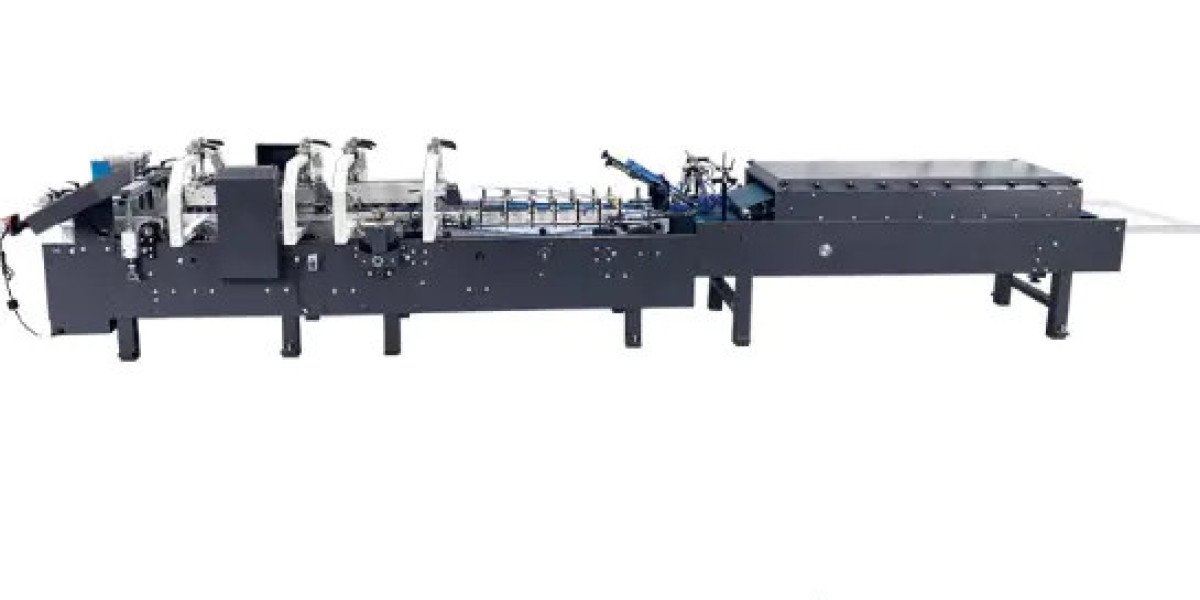

Calibration Protocols Enable Quick Carton Folder Gluer Machine Changeovers
Packaging facilities face constant pressure to accommodate diverse box sizes while maintaining production throughput, yet changeover procedures often consume hours that could otherwise generate revenue. The transition from one carton dimension to another involves adjusting folding rails, repositioning glue nozzles, recalibrating belt tensions, and verifying alignment across multiple stations. CenwanMachine, manufactured by Wenzhou Cenwan Machinery Co., Ltd., designs its Carton Folder Gluer Machine with quick-change features that reduce setup duration without sacrificing folding accuracy. What calibration sequence minimizes downtime while ensuring consistent box quality across size variations?
The calibration process begins with reference point establishment, a foundational step that determines all subsequent adjustments. Each machine possesses fixed reference positions on its frame, typically marked with permanent indicators or engraved scales. Operators should record the baseline settings for each standard box size produced regularly, creating a reference library that eliminates guesswork during changeovers. CenwanMachine incorporates digital position displays and mechanical stops that allow operators to return to previous settings with repeatable accuracy. This reference system transforms calibration from a trial-and-error exercise into a predictable sequence, reducing the time spent on initial setup and verification.
Feeding section adjustment directly affects sheet registration and subsequent folding accuracy. The side guides, feed belts, and suction mechanisms require repositioning according to the new blank dimensions. Operators should calibrate the feed table width to match the box blank size, ensuring sheets enter the machine straight without skew. The feed belt tension and speed settings must accommodate different board weights and flute types, as heavy corrugated stock requires different handling parameters than lightweight paperboard. CenwanMachine equips its feed sections with quick-release locking mechanisms and digital position readouts, enabling operators to record and recall optimal settings for each box type. Systematic feed calibration prevents misfeeds that cause jams and production interruptions.
Folding rail positioning constitutes the most critical calibration step for box quality and consistency. The folding rails guide each panel through its designated fold path, and their position determines the final carton geometry. Operators must adjust rail angles, heights, and lateral positions according to the new box dimensions, ensuring each fold line aligns perfectly with the crease pattern. The pre-folding stations, which initiate the folds before full formation, require synchronized adjustment to prevent panel distortion. CenwanMachine designs folding rails with dovetailed mounting systems and micrometer adjustments, allowing precise positioning that maintains consistency across production runs. Accurate rail calibration eliminates skewed folds that compromise box appearance and stacking stability.
Glue system calibration demands attention to both position and application quantity. The glue nozzles or wheels must align with the intended adhesive lines on the newly sized blanks, requiring lateral and vertical positioning adjustments. The glue volume requires calibration according to board porosity and adhesive characteristics, as heavy corrugated absorbs more glue than coated paperboard. Operators should run test blanks through the machine after each calibration, examining glue patterns for coverage and penetration. CenwanMachine features quick-change glue nozzles and digital flow controls that simplify these adjustments, reducing the time required for glue system changeover. Proper glue calibration prevents under-adhesion that creates weak boxes or over-adhesion that causes messy appearance and production contamination.
Belt and chain tension verification occurs during every size changeover, as dimensional adjustments affect the mechanical relationships within the machine. The conveyor belts that transport blanks through the folding sections require tension checks to prevent slippage that causes timing errors. Timing chains and belts that synchronize folding stations need verification after any adjustment that changes their effective length. Operators should follow the manufacturer's tension specifications, using tension gauges or deflection measurements to ensure compliance. CenwanMachine incorporates visual tension indicators and quick-tensioning devices that simplify this verification process. Correct tension maintains timing accuracy and prevents belt damage that causes costly replacements.
Compression section adjustment affects final box sealing and drying quality. The compression belts or rollers that apply pressure to glued carton seams require repositioning according to the new box dimensions, ensuring consistent pressure across the entire adhesive area. Over-compression flattens cartons; under-compression produces weak seams. Operators should calibrate the compression gap and belt pressure to match the board thickness and adhesive setting requirements. CenwanMachine designs compression sections with adjustable pressure controls and gap indicators, enabling operators to achieve repeatable compression settings. Proper compression calibration guarantees strong adhesive bonds and consistent box dimensions.
Digital control systems simplify the calibration process through stored recipes and automated adjustments. Modern machines feature touchscreen interfaces that allow operators to select the desired box type from a library of stored settings. The machine then positions folding rails, adjusts glue nozzles, and sets belt speeds automatically, reducing manual intervention. CenwanMachine equips its machines with intelligent control systems that store calibration parameters for each box style, enabling one-touch changeovers between frequent production items. This automation reduces operator dependence and eliminates measurement errors that occur during manual recalibration. Digital calibration also provides documentation for quality audits and process verification.
Test run verification validates calibration accuracy before full production commences. Operators should run several test blanks through the machine after any size changeover, examining each for fold accuracy, glue coverage, and final box dimensions. Measurement tools, such as calipers and squares, verify that the produced boxes meet specification tolerances. Any deviations indicate calibration adjustments required before running the entire batch. CenwanMachine recommends maintaining a written verification log that records test results and any corrective adjustments made. This test procedure prevents large-scale production of defective boxes and builds confidence in the new calibration settings.
Operator training directly influences calibration speed and effectiveness. Even sophisticated calibration systems require knowledgeable operators who understand the relationships between settings and box quality. Training programs should cover the specific calibration procedures for each machine model, including reference point identification, adjustment sequences, and verification techniques. CenwanMachine provides installation training and ongoing technical support that builds operator competency and changeover efficiency. Well-trained operators complete calibrations faster and more accurately, reducing downtime and maintaining consistent quality across production runs.
Production managers who prioritize calibration protocols observe measurable gains in operational flexibility and output consistency. A well-executed changeover procedure transforms a potential bottleneck into a routine transition, allowing facilities to accept diverse orders without sacrificing efficiency. CenwanMachine builds calibration-friendly features into every Carton Folder Gluer Machine, from digital position displays to quick-release adjustments, supporting operators in achieving rapid size transitions. Explore the machine specifications at https://www.cenwanmachine.com/product and evaluate how these calibration capabilities for your Carton Folder Gluer Machine could streamline production scheduling and reduce changeover-related delays.