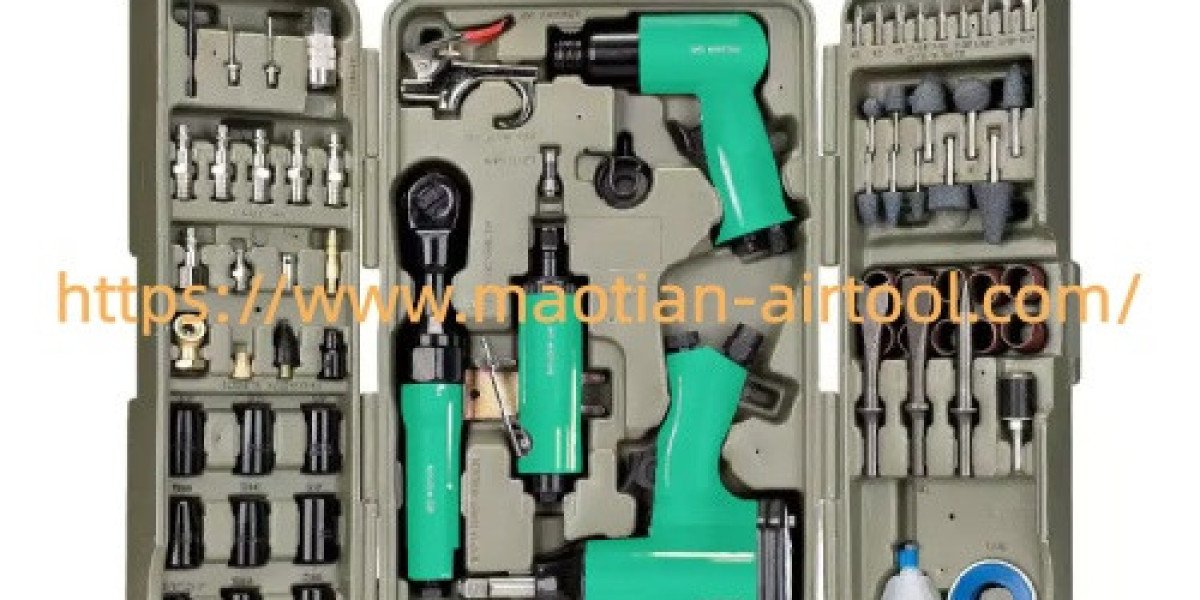

Air Hammer Tool Kit packages require specific volume and force from the compressor to deliver consistent percussion action. Most models perform reliably near 90 PSI with continuous flow around 4 cubic feet per minute. Measuring the actual delivery at the working pressure rather than the tank peak rating prevents under performance and overheating. A source that recovers quickly after each burst keeps the piston moving without interruption.
Hose diameter influences the volume that reaches the inlet. A 3/8 inch inside diameter line reduces friction loss over moderate distances while a smaller line can restrict flow and drop effective pressure at the device. Quick connect fittings should match the inlet thread usually 1/4 inch NPT to avoid leaks that waste volume. Longer runs may need a slight increase at the regulator to compensate for pressure drop.
Duty cycle matters when planning compressor size. Intermittent use such as cutting sheet metal or driving out pins allows a smaller tank to keep up. Continuous chiseling on thicker material demands higher sustained output so the motor does not starve. Check the free speed rating listed in blows per minute and pair it with a source that can supply the listed cubic feet per minute without frequent cycling.
Moisture and debris affect both pressure stability and internal wear. An inline filter and water trap remove condensate before it reaches the mechanism. A lubricator or manual oil drops at the inlet coat the piston and valve with each cycle. Applying a few drops of pneumatic oil before starting and after each hour of work helps maintain smooth travel and reduces friction that can lower effective force.
Regulator placement close to the device allows fine adjustment. Setting the line slightly above the recommended level and then dialing down at the tool end compensates for any losses. Never exceed the maximum marked on the housing because excess force accelerates wear and raises vibration. A pressure gauge at the inlet gives real time feedback during setup.
Storage and daily checks support consistent delivery. Drain the tank after each session to limit rust that can migrate into the lines. Wipe the exterior free of chips and store the unit in a dry area. Inspect the retaining spring and shank opening for wear that might allow bits to loosen under load.
Matching the source capacity to the listed requirements turns the percussion device into a predictable part of shop routines. When volume and force align the operator can focus on bit angle and steady pressure rather than fighting lag or stalling. Proper setup also extends the interval between service stops.
Maotian designs its percussion packages around these practical volume and force ranges so they integrate smoothly with common compressor setups found in garages and light fabrication spaces. The emphasis stays on steady function clear specifications and simple upkeep.
Review current models and detailed flow charts at https://www.maotian-airtool.com/product/ to confirm the right match for your pressure source.