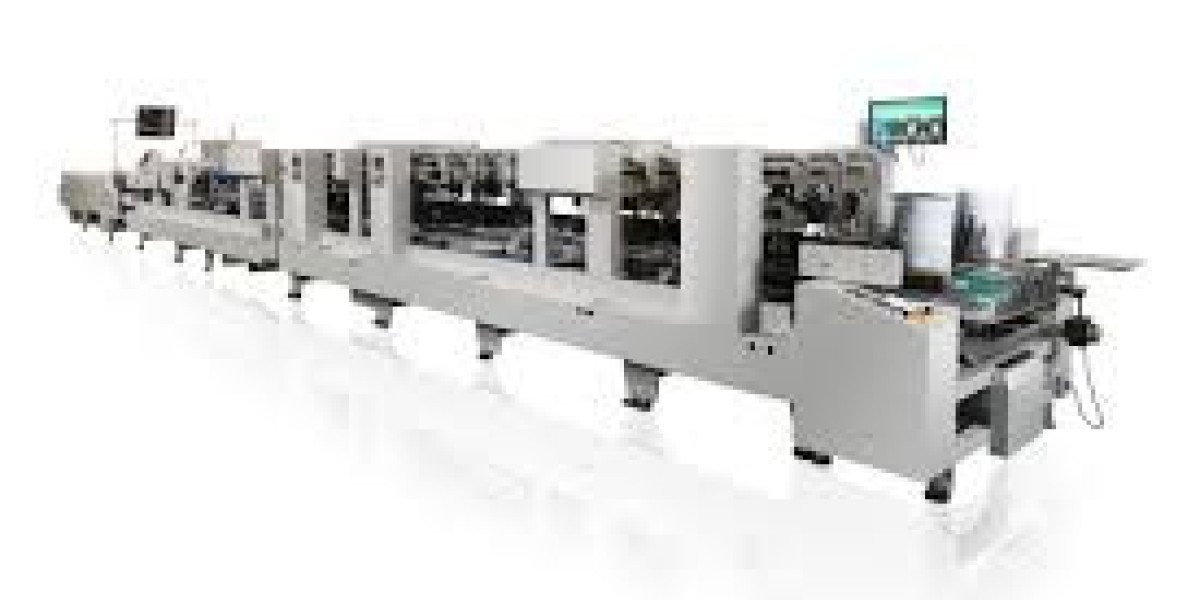

Packaging facilities often face the operational question of whether a single unit can process thinner folding carton stock and thicker corrugated board without extensive reconfiguration.Carton Folding Gluing Machine designs from cenwanmachine incorporate adjustable feeders pressure assemblies and folding modules that accommodate varying material thicknesses and surface characteristics. The structure starts with a solid frame and precise alignment controls that keep blanks on path whether the stock is flexible cardboard or multi-layer corrugated. Operators adjust belt tension side guides and adhesive delivery according to the board currently loaded. Have you reviewed how frequently your production switches between these material categories?
Feeding mechanisms form the foundation of dual material performance. Servo driven components and pneumatic support enable consistent blank separation and advance regardless of stiffness or caliper. Independently adjustable side guides maintain parallel travel and limit skew when moving from softer cardboard to firmer corrugated sheets. Pre-folding units prepare the score lines so later stages produce clean folds on both material types. These settings remain accessible through the operator interface so transitions stay manageable within mixed daily schedules.
Folding and adhesive application sections extend the same adaptability. Roller pressure and belt force can be varied to match the compression behavior of cardboard against that of corrugated board. Adhesive systems meter consistent volume whether the surface is smooth coated stock or the more open liner of corrugated material. Lock bottom and crash lock modules engage reliably for either category once the corresponding attachments are selected. The continuous route from infeed through folding to delivery preserves registration so finished cartons hold their intended dimensions.
Stored job parameters allow separate profiles for cardboard sequences and corrugated sequences. After an operator records preferred values for a given board grade and carton style those settings can be recalled for subsequent runs. This function limits repeated manual tuning and helps sustain output uniformity when material type changes during a shift. Display screens show real time status and permit fine adjustment of speed pressure and adhesive flow without breaking the production sequence.
Care routines follow parallel patterns for both material streams yet certain points receive additional focus during corrugated processing. Corrugated board tends to release more dust and edge fibers so scheduled cleaning of belts and sensors prevents buildup that could disturb alignment. Cardboard runs leave lighter residues yet still benefit from regular checks of folding rollers and adhesive nozzles. Completing a defined cleaning sequence after each material change helps retain mechanical accuracy and lengthens intervals between deeper service work.
Operations that alternate between cardboard and corrugated orders obtain practical flexibility from one machine platform. Rather than assigning separate lines to each material the same equipment processes sequential jobs after a controlled changeover. This arrangement simplifies floor layout and reduces the total number of units requiring operator familiarization and spare part stocks. The capacity to handle both categories on a single system also accommodates smaller order quantities without the disruption of full line changeovers.
When confirming suitability for dual material work it proves useful to observe sample runs of the board grades that dominate current orders. Watching blank feed stability crease formation adhesive line uniformity and final carton squareness at normal production speeds supplies direct evidence of behavior. Conversations with technical personnel about flute ranges and thickness limits further define the practical operating envelope of the chosen configuration.
In the final analysis the ability to process both cardboard and corrugated materials depends on considered mechanical layout and straightforward adjustment access. A carefully specified Carton Folding Gluing Machine from cenwanmachine that includes these characteristics can be reviewed in detail at https://www.cenwanmachine.com/ where available models and configuration guidance are presented. The emphasis remains on dependable material transport accurate folding and uniform adhesive application so the equipment meets varied packaging requirements with controlled complexity.